




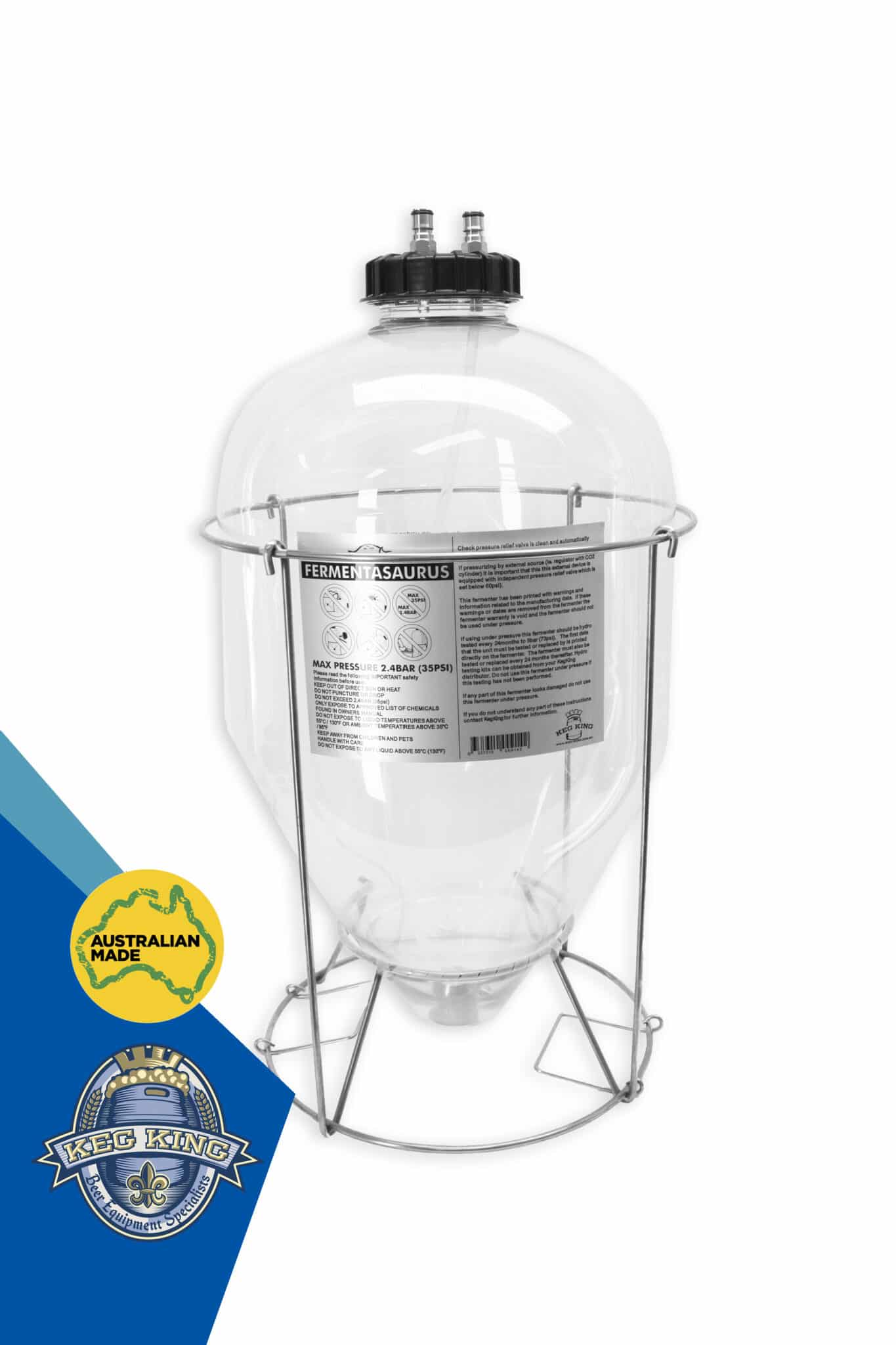
Fermentasaurus – Snub Nose – 35 litre


Original price was: kr. 1.095,00.kr. 449,50Current price is: kr. 449,50.
Keg-King Snub Nose
Fermentasaurus is the world's first commercially available, pressure-capable PET fermenter up to 2.4 Bar, that easily fits into a Series 4 kegerator.
Snub Nose uses the same highly specialised PET material as the original Fermentasaurus.
Manufactured in Springvale, Victoria, this Australian-made product greatly simplifies the homebrewing process by allowing the brewer to ferment, carbonate and transfer their beer under pressure.
The brewer will also enjoy seeing the yeast in action because Snub Nose Fermentasaurus is crystal clear.
Snub Nose Fermentasaurus can carbonate your clear finished wort and the beer can then be bottled directly, removing the need to wait for your beer to carbonate in bottles.
You can benefit from using a Adjustable safety valvel (not included) attached to the CO2 coupling to control the internal pressure of your fermenter.
The brewer can pressurise the vessel up to 2.4 Bar (35 psi) so they can carbonate and tap directly from the vessel like a keg.
Simply connect a tap, keg system or picnic table and CO2. Beer served straight from the fermenter is fresh, bright and fully flavoured, completely free of oxygen.
Transferring beer to kegs or other fermentation vessels is simple, hygienic and practically anerobic (oxygen-free),
2 black ball-lock couplings with hose in between, takes/gives the liquid from the bottom of both kegs etc.
Pressurise the container you are draining from and deflate the one you are refilling. Finished transfer kit (link)
Specifications:
Fermentation vessel: Long molecular PET
Fermentation volume: 35L
Frame: 304 stainless steel
Push lid: all-lock couplings (304), glass-reinforced nylon neck ring, polypropylene lid, 2.4 bar (35psi) safety valve
Low seal: Nitrile butadiene rubber (NBR)
Working pressure: 2.4Bar (35psi)
Burst pressure: over 7 bar
Test pressure: 5 bar
Please note:
We strongly advise against using chemicals for cleaning, such as Keg Clean and defoamer
You can also use other products such as CIP lye and CIP acid for cleaning and OxiPro for disinfection. You SHALL both clean and sanitise, there are no all-in-one products that work unless they damage your tanks. Don't overdose the products, it can damage the equipment.
Heat damages PET fermenters more than chemicals. At 55 degrees Celsius, PET softens and deforms permanently.
It is best to let hot cleaning solutions cool down to 30 degrees C before use.
Following these recommendations will ensure the functioning of your fermentation tank for its lifetime.
| Weight | 4 kg |
|---|
Only logged in customers who have purchased this product may leave a review.
Related products


Reviews
There are no reviews yet.